
Top 3 Business Automation Mistakes Costing Agencies, Home Services, and Medical Practices Clients
In today's fast-paced digital landscape, agencies, home services, and medical practices are increasingly turning to business automation to enhance efficiency and client satisfaction. However, without careful implementation, automation can lead to significant pitfalls that not only disrupt operations but also erode client trust. In this post, we'll explore the top three automation mistakes to avoid and provide actionable solutions to safeguard your business.
Mistake #1: Over-Automating Without Handling Exceptions
What It Is: Implementing automation across all processes without accounting for exceptions or unique scenarios.
Why It's Detrimental: Not every process should be fully automated. Real-world operations always include exceptions—like refunds, cancellations, or compliance overrides. Over-automation can lead to system failures when unexpected situations arise, causing delays and customer dissatisfaction. (medium.com)
How to Fix It: Design fallback mechanisms and escalation paths within your automation systems. Maintain a balance between automation and human oversight to ensure that exceptions are handled appropriately, preserving operational integrity and client trust.
Mistake #2: Ignoring Data Quality
What It Is: Neglecting the accuracy, completeness, and consistency of data before implementing automation.
Why It's Detrimental: Automation relies heavily on data quality. Poor data can lead to errors, misinformed decisions, and process failures. For example, automating a mailing list with outdated contact information can damage client relationships. (umatechnology.org)
How to Fix It: Conduct thorough data audits prior to automation implementation. Cleanse and validate existing data, and establish data governance policies to maintain data integrity over time. Incorporate error-handling and validation steps within automated workflows to ensure reliability.
Mistake #3: Underestimating the Importance of Employee Involvement and Change Management
What It Is: Implementing automation without involving employees in the planning process or neglecting the human aspect of change management.
Why It's Detrimental: Ignoring employee involvement can lead to resistance and underutilization of automation systems. Employees may feel alienated or threatened by new technologies, resulting in decreased morale and productivity. (umatechnology.org)
How to Fix It: Involve employees early in the automation planning process. Provide training and support to ease the transition and address concerns. Establish clear communication channels to gather feedback and make necessary adjustments, ensuring that automation enhances both operational efficiency and employee satisfaction.
Conclusion: Actionable Next Steps
To avoid these critical automation mistakes, consider the following steps:
- Assess Your Processes: Identify which processes are suitable for automation and which require human intervention.
- Ensure Data Quality: Implement robust data management practices to maintain accurate and consistent data.
- Engage Your Team: Involve employees in the automation journey through training, feedback, and support.
By proactively addressing these areas, your business can leverage automation effectively, enhancing client satisfaction and driving growth.
Tags:
- business-automation-mistakes
- automation-errors
- data-quality-issues
- employee-involvement
- automation-best-practices
Estimated Read Time: 5 minutes
Image Prompt:
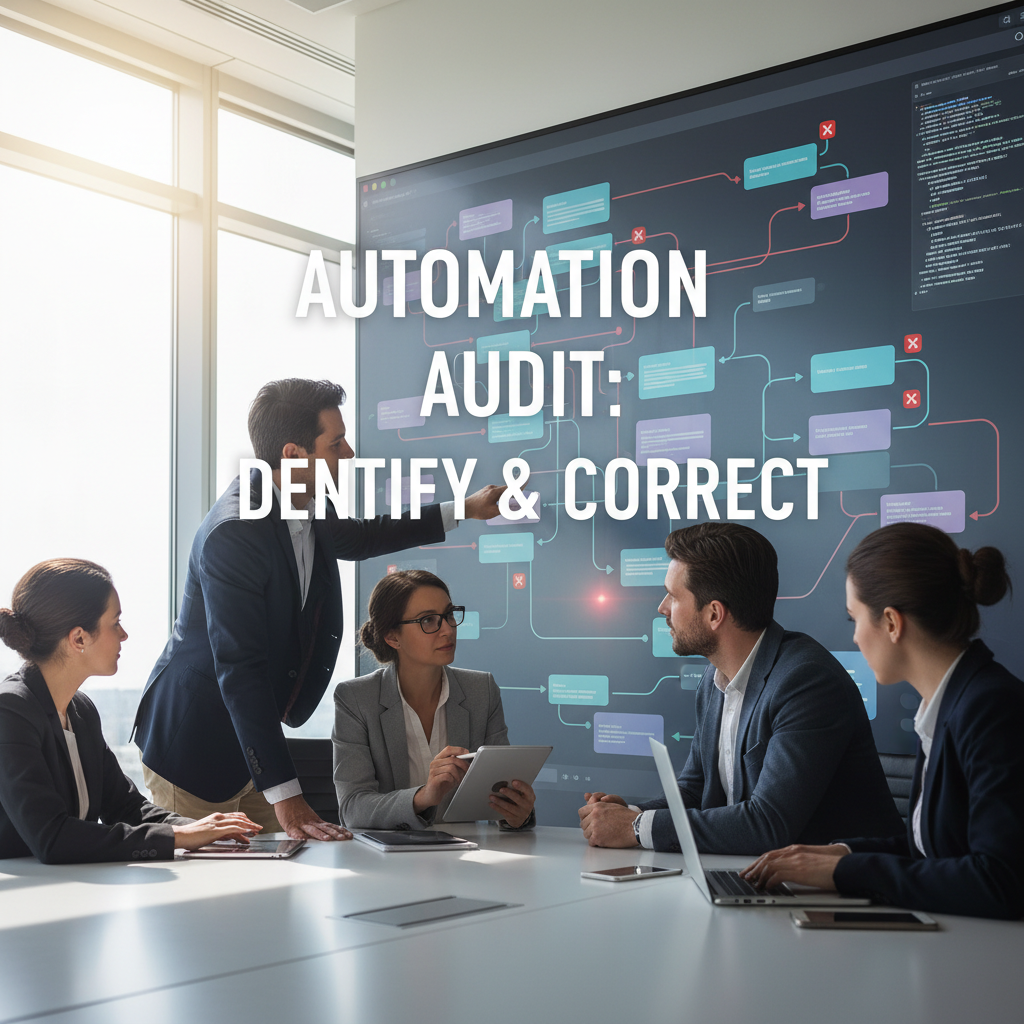
A professional image depicting a business team collaborating around a digital dashboard, highlighting the concept of automation pitfalls and solutions in a corporate setting.
Related Articles

Top 3 Automation Mistakes Costing Your Business Clients
Avoid these common automation pitfalls to enhance efficiency and client satisfaction.

Top 3 Automation Mistakes Costing Your Business Clients
Avoid these common automation pitfalls to enhance efficiency and client satisfaction.
Top 3 Automation Mistakes Costing Your Business Clients
Avoid these common automation pitfalls to enhance efficiency and client satisfaction.
Comments (0)
No comments yet. Be the first to comment!