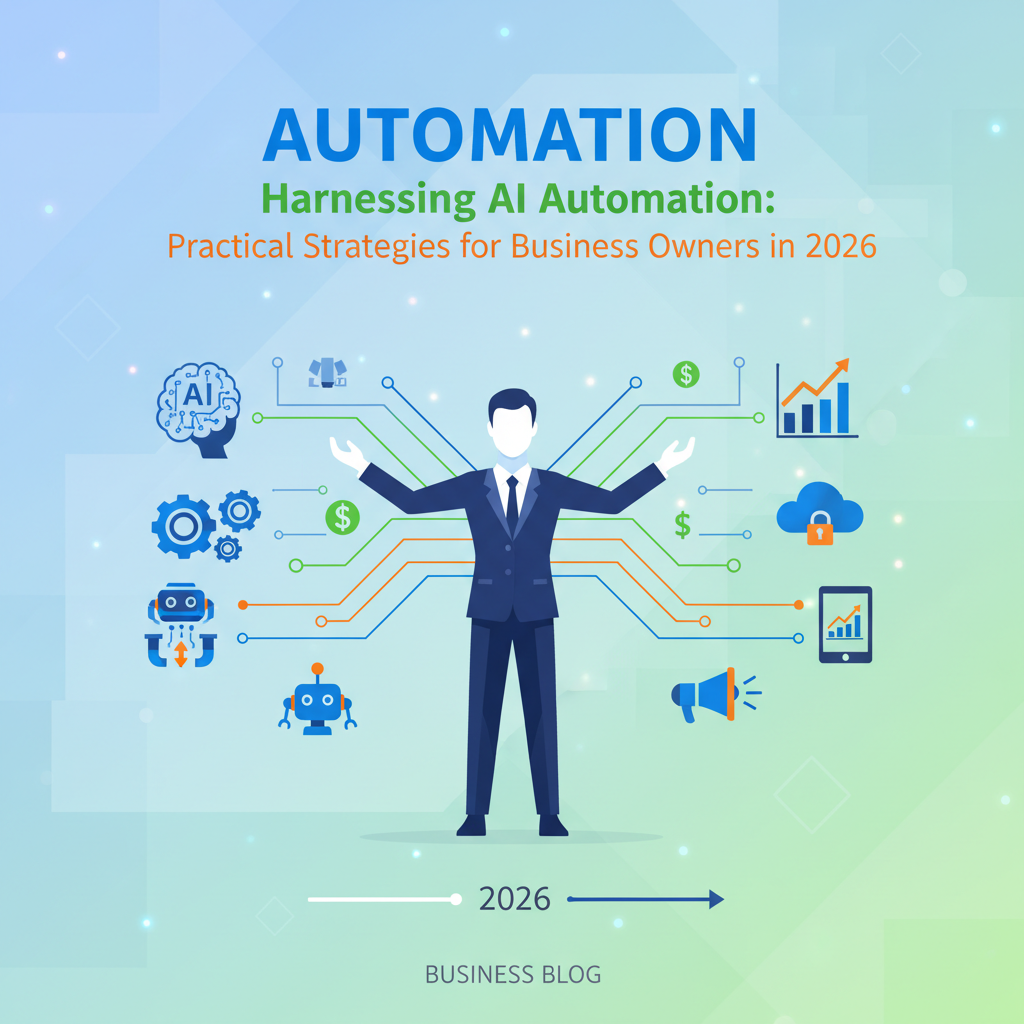
Harnessing AI Automation: Practical Strategies for Business Owners in 2026
As we progress through 2026, artificial intelligence (AI) continues to revolutionize business operations, offering unprecedented opportunities for efficiency and innovation. For business owners, understanding and implementing AI automation is no longer optional—it's essential for staying competitive.
Understanding AI Automation Trends in 2026
AI automation encompasses the use of AI technologies to perform tasks that traditionally required human intervention. In 2026, several key trends are shaping this landscape:
-
Agentic AI: Autonomous AI agents are now capable of executing complex, multi-step workflows without human oversight. These agents can handle tasks such as data analysis, customer support, and decision-making processes, significantly reducing operational costs and increasing efficiency. (uipath.com)
-
Hyperautomation: This approach integrates multiple technologies—including robotic process automation (RPA), AI, and machine learning—to automate end-to-end business processes. Hyperautomation enables organizations to streamline operations across departments, leading to faster execution and reduced errors. (manageengine.com)
-
Predictive Automation: Leveraging AI to anticipate future events allows businesses to proactively address issues. For example, predictive maintenance can forecast equipment failures, enabling timely interventions that minimize downtime. (zorbis.com)
-
Embedded AI in Business Software: AI capabilities are increasingly integrated into everyday business tools like customer relationship management (CRM) systems and enterprise resource planning (ERP) platforms. This integration provides real-time insights and automated recommendations within familiar interfaces, enhancing decision-making processes. (outsourceaccelerator.com)
Practical Implementation Tips for Business Owners
To effectively integrate AI automation into your business, consider the following steps:
-
Identify Repetitive Tasks: Begin by pinpointing routine processes that consume significant time and resources. These are prime candidates for automation.
-
Evaluate AI Solutions: Research AI tools that align with your business needs. Opt for solutions that offer scalability and can integrate seamlessly with your existing systems.
-
Start Small and Scale: Implement AI automation in a single department or process to test its effectiveness. Once successful, gradually expand its application across other areas of your business.
-
Invest in Training: Ensure your team is equipped to work alongside AI technologies. Provide training to enhance their understanding and comfort with new tools.
-
Monitor and Optimize: Continuously assess the performance of AI-driven processes. Use analytics to identify areas for improvement and make necessary adjustments.
Overcoming Challenges in AI Automation
While AI automation offers numerous benefits, businesses may encounter challenges such as:
-
Data Quality Issues: AI systems rely on high-quality data. Investing in data cleansing and management is crucial.
-
Integration Complexities: Ensuring that AI tools work harmoniously with existing systems can be complex. Collaborate with IT professionals to facilitate smooth integration.
-
Change Management: Employees may resist new technologies. Foster a culture of innovation and provide support to ease the transition.
Conclusion
Embracing AI automation in 2026 is a strategic move that can lead to significant improvements in efficiency, decision-making, and overall business performance. By understanding current trends and implementing AI thoughtfully, business owners can position their organizations for sustained success in an increasingly digital landscape.
Tags: ai-automation, hyperautomation, predictive-automation, embedded-ai, business-automation
Estimated Read Time: 5 minutes
Related Articles
AI-Powered Automation: Transforming Small Business Operations in 2026
Discover how AI-driven automation tools are revolutionizing small business operations, enhancing efficiency, and driving growth in 2026.
Harnessing AI Automation: Practical Strategies for Business Owners in 2025
Explore actionable insights on AI automation advancements and how businesses can implement them effectively in 2025.

AI Trends for 2026: What Business Owners Need to Know
Stay ahead of the curve with insights into the most impactful AI trends emerging for 2026 and how to prepare your business for the AI-driven future.
Comments (0)
No comments yet. Be the first to comment!